


116 3rd St SE
Cedar Rapids, Iowa 52401
How a University of Iowa Ph.D. student is improving treatments for a historically ‘neglected’ cancer
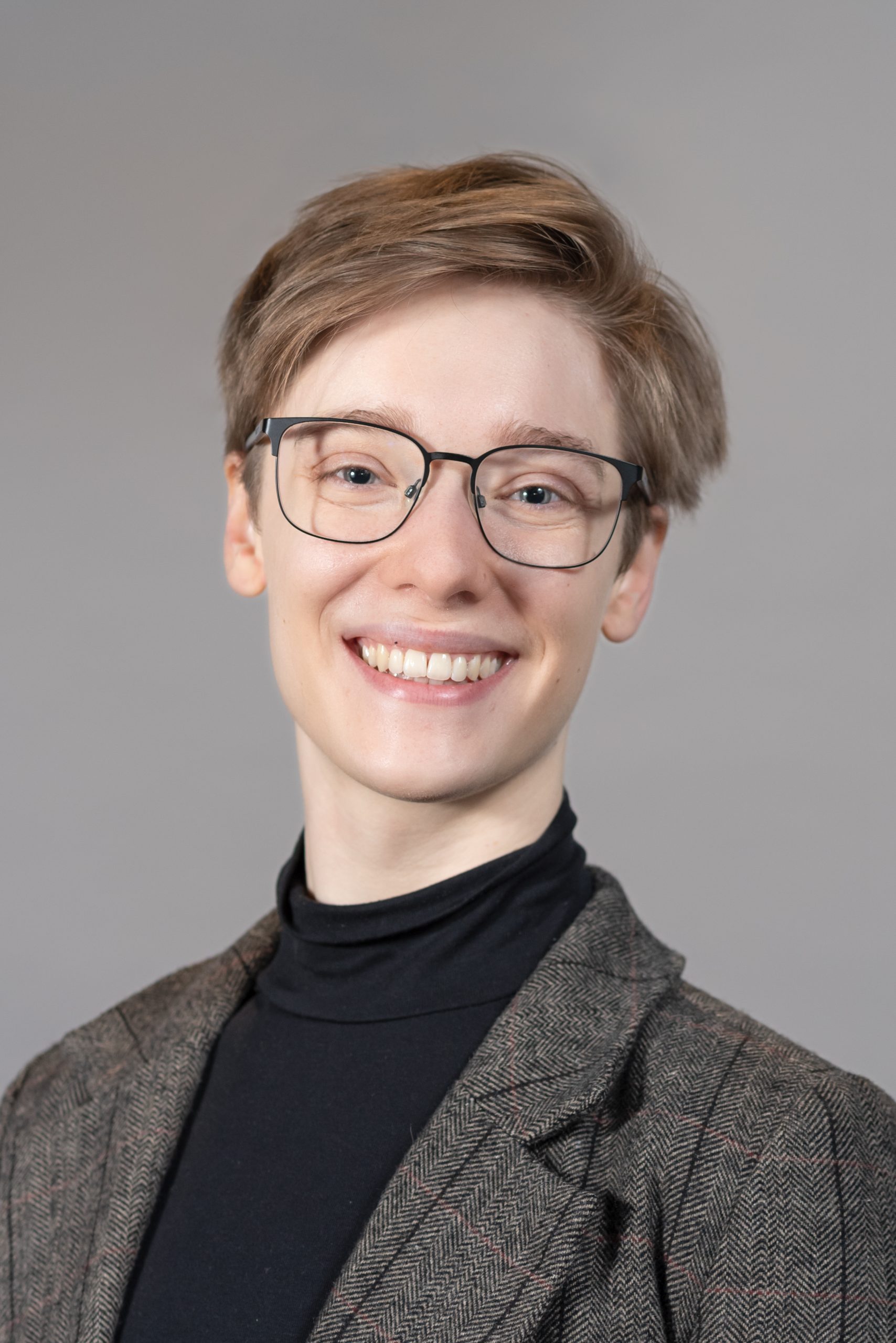
Katie Colling is using tiny tumor models to find uterine cancer interventions that don’t require surgery
Dec. 27, 2025 4:35 am
The Gazette offers audio versions of articles using Instaread. Some words may be mispronounced.
Katie Colling didn’t plan on being a cancer researcher when she was a little girl. She planned on being an amphibian.
“I always told my mom I wanted to grow up to be a frog, and then when I found out I couldn’t grow up to be a frog I wanted to be a herpetologist,” Colling said, laughing.
Collings’ academic interests had already drifted from herpetology to human health by the time she was an undergraduate student. During a summer internship, Colling learned her grandmother’s breast cancer had returned after 15 years of remission and spread throughout her body.
“I witnessed her really navigate the challenges and toxicities of treatments and chemotherapy, and seeing how devastating that can be, not only for a person, but the people around them,” Colling said. “And seeing them go through that really inspired me to research safer and more effective treatments.”
Colling is now a fourth-year Ph.D. student in the University of Iowa’s cancer biology program working to improve non-surgical treatment options for cancer patients. Using model tumors built from patients’ living cancer cells, Colling is testing 12 progestin-based medications to see which have a hidden bonus: fighting uterine cancer. Her findings will lay the foundation for clinical trials that could lead to the first major advance for early-stage uterine cancer since the 1990s.
Some uterine cancer patients’ options are limited
“There are only two cancer types that survival is getting worse,” said Kristi Theil, assistant professor of obstetrics and Colling’s mentor. “It’s uterine cancer and cervical cancer.”
Of those 67,000 uterine cancer diagnoses, the vast majority will be in postmenopausal patients. But research published in the journal Cancers in March found cases are rising in premenopausal patients who may still want children. This presents a dilemma for patients: opt for a hysterectomy and be unable to conceive afterward or go with non-surgical, or conservative, therapies in which the cancer returns 20-40% of the time.
What’s more, surgery isn’t a safe option for every patient. Uterine cancer and obesity are highly correlated, but so are obesity and surgical complications. Even if a patient is OK with a hysterectomy, it may not be safe for them to get one.
“It's a really challenging position to put these patients in,” Colling said. “You can either have surgery which is really risky or you can use a treatment that does not work very well.”
That’s why Colling is working to improve conservative options for uterine cancer patients. Non-surgical uterine cancer treatments involve progestins, synthetic versions of the hormone progesterone. In the uterus, progesterone is the yin to estrogen’s yang. While estrogen encourages the growth of the uterine lining, progesterone stifles that growth. That function makes progestins useful for a range of gynecologic needs, from contraception to managing polycystic ovary syndrome.
One of three progestins is typically used to treat uterine cancer. But there are more than 20 different FDA tested and approved progestins used in different medications. Thiel suggested Colling explore the possibility of using one of the other progestins for cancer treatment.
“To date, nobody has ever compared the efficacy of progestins to each other in the setting of invasive cancer,” Colling said. “No one has ever explored any of the other 20 as a treatment for endometrial cancer.”
Using tiny tumors for progestin therapy testing
To find out if a progestin is an effective treatment for cancer, Colling first needs cancer cells to treat. Uterine cancer patients who undergo hysterectomies at the University of Iowa have the option to donate some of their cancer tissue to Thiel’s lab instead of having it thrown out. Colling uses donated tissue to create tiny tumors she can test treatments on. First, she breaks the donated samples down into individual cells and releases them in a chemical solution. Then, Colling then pours portions of the tumor soup into small vials.
In the vials, the cells self-organize into thousands of soccer ball-like clumps that act as miniature tumor models. These models are called organoids. Colling has organoids created from 14 different patient samples. She tests a progestin’s effectiveness by adding a small amount to an organoid batch and watching how it responds.
Kimberly Leslie, a professor in the division of molecular medicine at the University of New Mexico comprehensive cancer center, said Colling’s work with organoids is helping researchers discover the precise ways that progestins fight uterine cancer cells.
“People have been using these hormones for a very long time and the true mechanisms, the multimodal mechanisms of action have not been fully investigated,” Leslie said. “But we are now developing the molecular tools for the first time in the last decade or two to really understand how these work.”
The lab has limited resources, so Colling can’t test all of the clinically available progestins. She has, however, selected 12 progestins with different molecular structures to get a sense of which structures may be most effective. Thiel said she expects Colling to narrow that down to the four most promising candidates. But there’s a catch.
“It turns out that some of these hormones, but likely not all, when used over long periods of time, may put women at an increased risk for breast cancer while preventing the uterine cancer,” said Leslie. “There are protective effects of these hormones but also potentially effects that may put someone at slightly increased risk over a lifetime.”
A legacy of gynecologic cancer research
To find a progestin that counteracts one cancer without encouraging another, Colling’s final four will be tested by breast cancer researcher Christy Hagan at the University of Kansas. The University of Iowa (Colling & Thiel), the University of Kansas (Hagan), the University of New Mexico (Leslie) and the University of Utah are all recipients of a grant from the National Cancer Institute to advance hormonal treatments for endometrial cancer.
Collings is part of a legacy of gynecologic cancer research spanning three academic careers. Before returning to her home state, Leslie was chair of the OB-GYN department at the University of Iowa. Leslie mentored Thiel, who is mentoring Collings in return. All three are involved in the progestin therapy research grant project.
Colling’s tenacity brought her into that legacy — she contacted Thiel when she was first establishing her lab at the University of Iowa.
“I was determined I was not going to take a graduate student my first year running the lab, but she was so persistent and so passionate about wanting to work on women's cancers, that it's just really hard to say no to that much enthusiasm,” Thiel said.
Women’s health issues have traditionally been under researched, Colling said, which makes her excited to further this study. Additionally, the mortality rate of uterine cancer has been getting worse, particularly since 2000, Colling said.
”I think uterine cancer is health issue that’s been neglected for a really long time,” she said. “It is gaining traction and picking up speed, and hopefully our work is going to be able to have a big impact on the lives of these patients.”
Endometrial Cancer Signs & Symptoms
The American Cancer Society says unusual vaginal bleeding, vaginal spotting and other discharge are the most common symptoms of endometrial cancer. Later-stage symptoms include weight loss and pelvic discomfort.
Cancer isn’t the only reason you may experience these symptoms, but the American Cancer Society and the CDC say it’s still a good idea to tell your doctor about any bleeding that isn’t normal for you.
Both organizations suggest physical activity and maintaining a healthy weight to reduce your risk of developing endometrial cancer.
Comments: fern.alling@thegazette.com
 Daily Newsletters